
One of the first images that comes to mind when we hear the word Waikiki is clear waters, white-sand strips, hotels, and tall buildings.
However, the Waikiki of today is rather different from Oahu’s South Shore location of the 18th and 19th centuries.
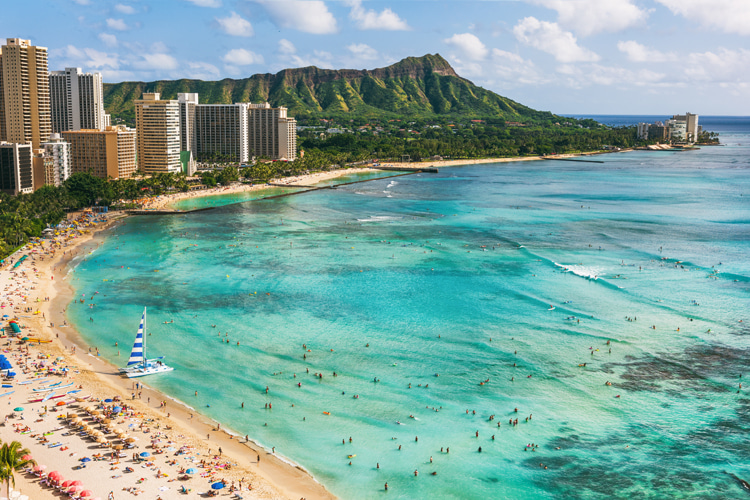
Development and tourism conquered Waikiki, but Honolulu’s iconic neighborhood still holds some of the charisma of the early 1900s.
It’s one of the few places on Earth where surfing is part of a continuous cultural tradition stretching back centuries.
Some of the most interesting stories are hidden beneath the tourist image of beach umbrellas and surf schools.
Let’s dig into some of the most relevant historic chapters in Waikiki’s surf culture history.
Waikiki was surfing’s original global capital
Long before California, Australia, or the North Shore of Oahu became surf icons, Waikiki was the place that introduced much of the world to surfing.
Early visitors in the 1800s described Hawaiians riding waves standing upright on wooden boards, something many Western observers had never seen before.
One of the first was Captain James Cook, who witnessed ancient Hawaiian chiefs and royalty regularly surfing here.
Hawaiian royalty surfed these exact wave
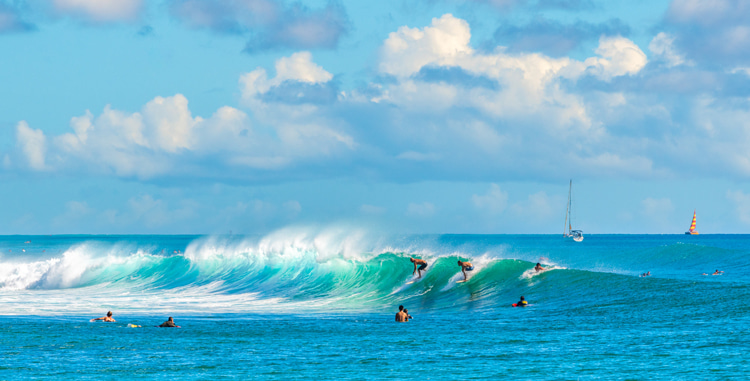
Surfing in Hawaii wasn’t originally a casual beach activity. It was tied to status, spirituality, and skill.
Waikiki’s long, forgiving reefs made it a favorite playground for ali’i (chiefs and royalty), who rode enormous boards and competed publicly to demonstrate athletic ability and mana (spiritual power).
So, since its inception, surfing has been sort of a show-off water activity.
However, long before it was a tourist hub, ancient Waikiki operated under the kapu system, a rigid structure of religious and social laws that strictly stratified society.
Surfing (he’e nalu) was deeply embedded in this system.
Commoners and royalty (ali’i) did not share the same waves.
Elite chiefs held monopolies over specific breaks, such as Kapuni in Waikiki, which were forbidden to commoners.
In fact, Hawaiian oral histories tell of an athlete named Pikoi who inadvertently rode a wave alongside the queen at her private, taboo surf spot and was nearly executed for the transgression.
The world’s most famous surf ambassador grew up here
The legendary Duke Kahanamoku learned to surf in Waikiki.
While he won Olympic gold medals in swimming, he became even more influential for introducing surfing to places such as California and Australia.
One famous story: in 1915, Duke demonstrated surfing in Australia on a board he made himself, helping launch modern Australian surf culture.
What he exported was essentially Waikiki surf culture.
Some Waikiki waves may have the longest surfing history on Earth
The surf break known as Queens is often cited as one of the oldest continuously surfed waves in the world.
Historical evidence and Hawaiian oral traditions suggest people have been riding waves here for centuries, possibly more than a thousand years.
Waikiki’s waves helped shape surfboard design
The long, peeling reef breaks of Waikiki reward graceful riding rather than brute-force maneuvers.
The unique environment helped develop classic longboard techniques such as cross-stepping and noseriding.
Modern longboard competitions still draw inspiration from the style born here.
The 19th-century missionary surfing ban
After Western contact and social upheaval in the 1800s, traditional Hawaiian culture – including surfing – declined dramatically.
When Christian missionaries arrived in Hawaii, they heavily disapproved of the sport.
It wasn’t the wave-riding itself that bothered them, but rather the culture surrounding it: men and women surfing together without clothing, the intense community gambling on surf heats, and the fact that people skipped church when the surf was good.
Due to missionary pressure and the tragic drop in the Native Hawaiian population from introduced diseases, surfing was suppressed so heavily that by the late 19th century, only a relatively small number of Hawaiians still practiced it regularly.
The sport had to be actively revived in the early 1900s by a group of passionate locals and Hawaiian elites.
The first surf club in the world was founded in Waikiki
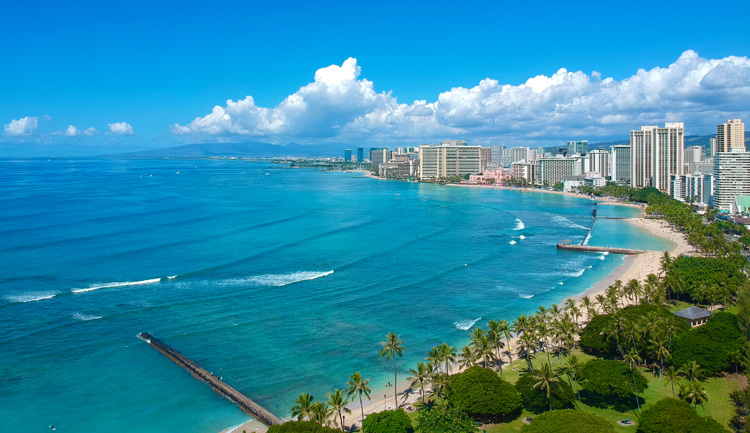
The Outrigger Canoe Club, founded in 1908, is generally regarded as the world’s oldest organized surfing club.
Its goal was to preserve surfing and canoeing traditions while promoting Waikiki as a destination.
Surfing in Waikiki reflected Hawaii’s racial tensions
One of the lesser-known stories involves the rivalry between the Outrigger Canoe Club and the Hawaiian-led Hui Nalu.
Many Native Hawaiian surfers felt excluded from elite institutions despite being heirs to the surfing tradition