
In 2025, 6.3 million people in the United States tried fishing for the first time, accounting for 11% of all participants for the year, up from 9% in 2024. Meanwhile, total annual fishing participants reached 57 million, roughly 18% of the U.S. population; total fishing trips hit 918 million, a 3% increase compared to 2024. The core value of this dataset lies not in year-on-year market expansion or contraction, but in the simple fact that new users keep joining the angling market.
For the whole industry, every person picking up a fishing rod for the first time may grow into a long-term consumer of tackle, content, tournaments, clubs and even the outdoor lifestyle. Among all angling disciplines, lure fishing, with its active exploratory style, lightweight gear, technical appeal and social features, has become the primary gateway to attract this wave of young new users.
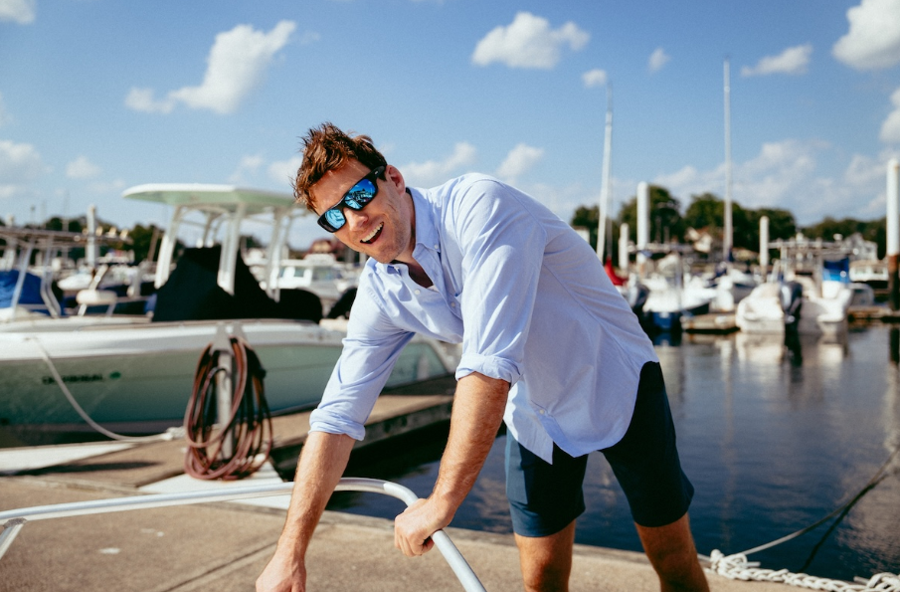
This trend is not exclusive to the U.S.; China’s lure fishing market also shows clear traits of youthification and new-user growth. When a sport grows younger, changes extend far beyond participants’ age. Gear design logic, content formats, aesthetic preferences and social patterns are all reshaped, and the underlying competition within the lure fishing sector is quietly shifting.
01 Demographic Shift: Young People Have Become Core Lure Consumers
Young consumers are no longer “potential users” for the lure fishing industry — they are today’s main consumer group.
According to the 2024 Sports Consumption Report jointly released by the School of Economics and Management, Shanghai University of Sport and JD Consumption & Industrial Development Research Institute: in 2024, post-90s and post-00s buyers contributed over 60% of total transaction value for lure products such as lure rods. As young shoppers continuously spend on rods, reels, lures and accessories, lure fishing is no longer merely a niche branch of traditional angling; it has gained consumption attributes as an outdoor lifestyle.
Source: 2024 Sports Consumption Report, School of Economics and Management, Shanghai University of Sport, JD Consumption & Industrial Development Research Institute
Why Lure Fishing Resonates With Young People?
The core experience of traditional angling is waiting: selecting a spot, sitting quietly and waiting for bites. It has a slow pace and hidden entry barriers. Lure fishing offers a different behavioural framework — locating fish, assessing conditions, searching, casting, retrieving line, adjusting and retrying. It is an active, highly interactive sport with instant feedback. This experience of “active exploration and immediate response” aligns perfectly with young people’s behavioural habits. Rather than simply “youthifying” traditional fishing, it reimagines angling as an outdoor leisure activity better suited to urban youth.
Looking at the U.S. market, the age profile of anglers has already undergone a notable shift: 44% of freshwater anglers in the United States are under 35. Youthification is an established industry reality.
Source: ASA & Outdoor Foundation, 2025 Special Report on Fishing
02 Hidden Variable: The Rise of Female Anglers Reshapes Product Evaluation Standards
If young people have changed the rhythm of lure fishing, the growing number of female anglers is transforming the industry landscape and product design logic.
ASA’s 2026 U.S. report states that female anglers in the U.S. totalled 21.1 million in 2025. Over a decade, the female angler population has grown by 5.4 million, an increase of roughly 34%, showing sustained strong long-term growth.
More noteworthy is the evolving industry roles. On-site observations from ICAST 2026 reveal women are no longer merely consumers visiting booths; they are now brand representatives, content creators, product developers, conference attendees and entrepreneurs. Industry media outlet Bassmaster described the rising presence of women at ICAST 2026 directly as a “turning point”.
Female users bring not just market growth, but new product benchmarks
The influx of female users means much more than an expanded consumer base; it introduces an entirely new set of purchasing decision criteria:
- Is the tackle light enough?
- Is storage convenient?
- Are there more options for appearance and colourways?
- Is ultra-high professionalism necessary for beginners?
At its core, these questions force the industry to rethink a fundamental issue: are we upgrading gear for veteran anglers, or creating reasons for more people to step to the water’s edge for the very first time?
In the past, the tackle industry tended to start discussions around technical parameters: weight, gear ratio, materials and action. But for new users, buying decisions often begin with a different question: “Is this suitable for me?” This shift pushes industry competition away from “who has better specs” toward “who understands users better”. The ICAST 2026 show encapsulates this transformation. On one side, there is a specs race featuring high-tech reels, electronic devices and innovative soft lures; on the other, lighter, more beginner-friendly gear alongside user-centric storytelling built around women, youth, content and communities.
03 Industry Competition Shifts from “Selling Tackle” to “Designing the First Successful Experience”
The old business model segmented products by category: rods, reels, lines, lures, hooks, apparel and accessories, with a primary focus on selling individual items to anglers. Newcomers, however, face a long list of hurdles from entry to first-hand experience: not knowing where to fish, what gear to buy, how to tie knots, how to pick lures, struggling with short casting distances, failing to catch fish, finding tackle overpriced, or even not understanding why they keep returning empty-handed.
What young new users truly need is rarely a pile of separate products, but a complete solution that lets them enjoy a successful first outing. Examples include “first lure tackle kit for beginners”, “how to choose gear for bank fishing on your first trip”, “one-hour lure fishing guides near cities”, “what lures to use for first-time bass fishing”, and “how to start lure fishing on a beginner budget”. These read less like traditional product ads, yet solve beginners’ real confusion: how do I get started?
Therefore, brands in the future may need to design not around “how to get young people to buy their first rod”, but “how to help someone holding a lure rod for the first time gain a sense of achievement within their first three trips”. Brand competition will evolve from specs battles to scenario-based competition. Whoever best understands beginners’ pain points, young people’s time constraints, spending power and content consumption habits, and helps users achieve that “first success”, will capture this wave of new-user dividends.
04 Overseas New Releases Validate This Youth-Oriented Product Logic
New product launches at ICAST 2026 globally validate this user-first, experience-led youth-focused product philosophy.
On-the-water, a North American angling media outlet, reported from ICAST 2026’s bass-fishing category that “urchin-style soft lures” emerged as one of the most prominent product trends. Rapala’s CrushCity TheCEO won the show’s “Best Freshwater Soft Lure” award, receiving extensive coverage from international industry media including Angling International.
In our view, the real value of this case lies not in a new product winning an award, but in a fundamental shift in lure design philosophy. Previously, soft lures prioritised high biomimicry to replicate real fish shapes. New-generation lures feature exaggerated profiles, stronger swimming action triggers and highly memorable visual designs. For young anglers, these products function not only as fishing tools but also carry greater shareability and social buzz: easier to recognise, better for photos/videos, and more likely to spark discussions around angling techniques.
This aligns closely with trends observed in China’s market. As large numbers of beginners enter the sport, product competition is no longer simply stacking technical parameters. Brands that create easier-to-grasp, experiential and shareable fishing styles will win over the new generation of users.
05 More Important Than the First Try: Repeat Purchases
Imagine today’s lure fishing market as a river. Young people keep arriving at the bank: some pick up a rod for the first time, cast their first lure, land their first fish, or film their very first lure-fishing video. At the same time, others leave discouraged after failing to catch fish, struggling with techniques, or finding the hobby expensive and troublesome.
Youthification is merely the starting point of industry growth. What determines the growth ceiling for lure fishing in the coming years is not how many young people buy their first lure rod, but how many return after their first trip to buy a second lure, a second rod, another set of tackle, or even bring friends along to fish.
Previously, brands competed to sell tackle to anglers. Going forward, the core competition will be: who can make young anglers reluctant to walk away after their first fishing trip.
Young people are re-entering the angling market, and lure fishing has become the core format connecting these new consumers. Brands that help beginners cross the threshold from “first time holding a rod” to “sustained passion” will truly reap the industry dividends.